
Community Guide: Armor Doctrine - Field Notes by Pardus
Captain Pardus, veteran pilot-engineer, walks through light, medium, heavy and plating styles from the cockpit, not the stat sheet. The rule that ties it together: every layer of armor needs the right block behind it.

Armor - no need to explain what it is; the in-game info covers the parameters fine. This guide isn't about repeating those numbers, it's about how you actually use armor, not what you slap on. It's obvious you won't use composite to tank lasers, right? Right. So let's talk styles.
Light Armoring Style
"Light armoring" doesn't mean light armor - it means the style. Light armoring is usually one block wide, which means AOE damage has a field day with it. But it's wrong to think every ship needs thick armor. Armor is heavy, and light armoring is typical on fast ships.
The best light armoring style is spaced armor. It pushes AOE damage into empty space, so only the block holding the "umbrella" of armor takes hits. The catch: that holder block has to match the armor used in the umbrella itself.
- Absorptive umbrella - held by another absorptive piece, power armor, or (ideally) harmonic glass, if you're not afraid of damage after losing it.
- Composite umbrella (rarely seen outside [REDACTED] formations) - heavy armor or power armor as the holder.
Never use light armor as a holder unless the umbrella itself is heavy armor. Against the damage types absorptive and composite are designed for, light armor will break before the umbrella does - and you'll just lose the whole section.
Splash damage gets taken only by the holder block or by vacuum. The whole thing relies on understanding how AOE damage spreads - it's not a circle, it spreads pixel by pixel.
Bottom line: light armoring is mainly for countering lasers when shields handle the main defence, or for low-resource builds where you can't afford much armor.
Medium Armoring
For people who think it's a crime to fly without proper armor but still want to stay agile - medium armoring is the answer. It's usually homogeneous (no gap between hull and umbrella), but it's still not built to soak damage for long. Medium armoring is typically 2–3 blocks wide, sometimes 4.
This is the first style that works as universal defence against both lasers and kinetics. You could just stack two layers of absorptive instead of one and call it "medium" - but real universal medium armoring has to be calculated. It's a combination of armors and "underarmors" - the holders explained above in light armoring.
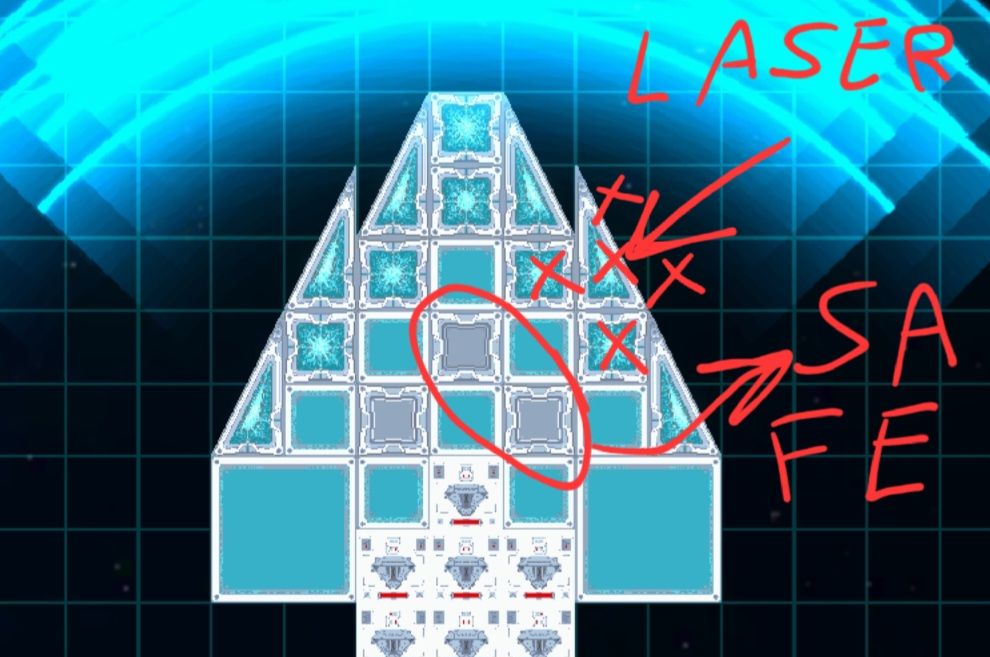
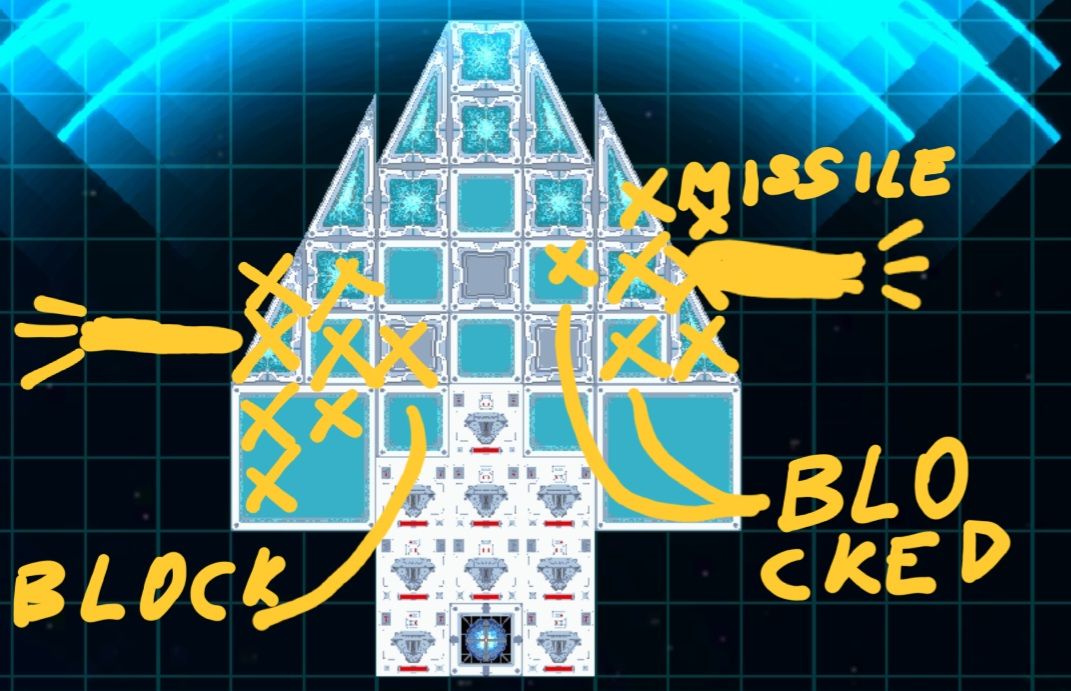
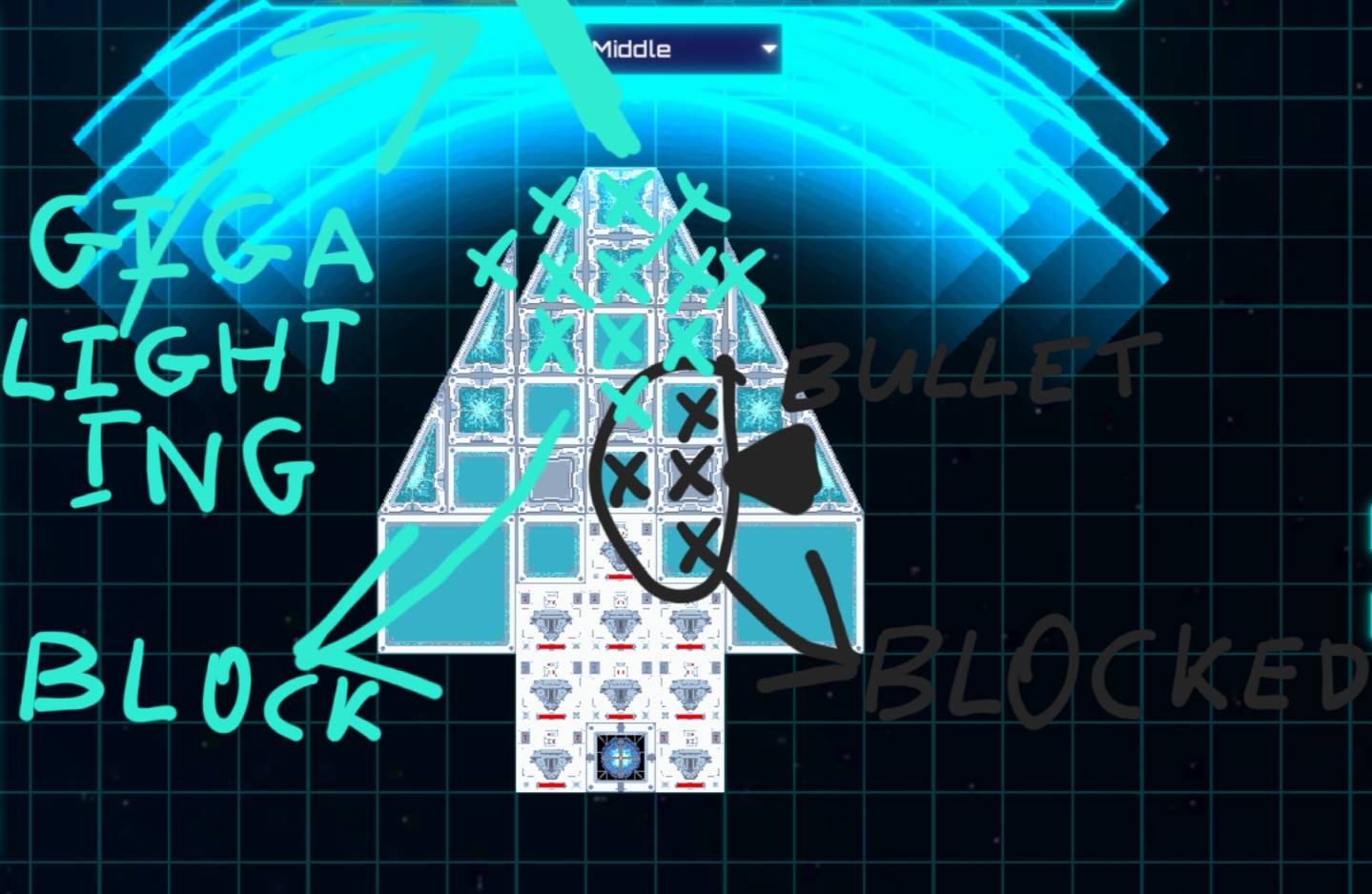
Each layer must support the previous one in terms of which damage type it blocks. Power armor is the most universal holder - don't be afraid to use it.
Some people will call this "heavy armoring", but at higher ranks this is exactly what medium looks like.
Plating Shield
Plating doesn't really belong to any single armoring style, since it works on everything, but it's most useful on light-armored ships. People often underestimate it - plating is solid support:
- It pre-detonates missiles and torpedoes. One layer of plating can shift one round of AOE damage away from your inner modules.
- It absorbs accidental rams. A layer of plating can save you from unexpected dashes by rammers - it'll soak the impulse and throw you off. You'll probably spin like crazy, but the main thing is: you'll be alive.

Heavy Armoring
Heavy armoring is essentially the same "cake" structure as medium, only thicker - more layers, more redundancy in the holder + umbrella chain. Same principles apply: every layer needs the right block behind it, power armor stays your best universal holder, and matching umbrellas to holders matters more than raw block count.
Original guide by Captain Pardus. Redacted by the Admiralty.